
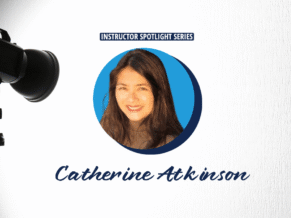
Who is Catherine Atkinson?
Catherine Atkinson is an instructor with EdTechTeacher. She is an experienced classroom teacher, curriculum designer, presenter, and technology coach. Catherine taught history/social science and ELA to English language, gifted, and special education students for 27 years at the middle school level. She has taught in a 1:1 classroom since 2008 where her students used MacBooks, iPads, and Chromebooks to collaboratively and creatively demonstrate their learning. Catherine has served in a variety of leadership positions: history/social science department chair, technology coordinator, master teacher, mentor teacher, and member of the instructional leadership team.
Catherine earned a Doctorate in Education with a specialization in Technology Integration in K16 Education from Johns Hopkins University. She has a B.A. in Psychology from the University of California Santa Barbara and M.S. in Educational Technology from California State University Fullerton. Catherine has presented at over 75 regional and national conferences in the areas of technology integration, differentiation, gifted learning, and digital literacy. Her research interests and publications focus on ways to integrate meaningful learning with technology in K-12 and teacher education.

Did you know that…
- Catherine and her husband split their time between California and Michigan–they get to enjoy life on the West Coast (Orange County) and Third Coast (Lake Michigan) 🌅
- Catherine loves learning new words–she uses Duolingo to practice Japanese, Spanish, and Italian. She is finally a member of the 365+ club! 🇯🇵🇪🇸🇮🇹
- Catherine and her husband love spending time with their adorable fur-baby Pickles where life is anything but boring!
Certifications
- Adobe Express
- Adobe Illustrator
- Adobe InDesign
- Adobe Photoshop
- Formative Certified Educator
- Google Level 1 Certification
- Newsela Certified Educator
Ways That Catherine Can Help!
Catherine’s expertise and knowledge can help you and your school/district:
- Create lessons and activities that support English language learners
- Conduct research studies/evaluations to determine the efficacy of programs and products
- Design learning opportunities that incorporate meaningful learning with technology: active, constructive, cooperative, authentic, and intentional activities
- Instill a sense of belonging in the classroom environment using frameworks such as: Brain-Targeted Teaching and CASEL 5
- Tailor instructional practices to support multiple modalities of learning
- SAMR Model
- TPACK Framework
- Universal Design for Learning
Beyond traditional K-12 environments, the instructional design frameworks Catherine champions translate seamlessly into adult education and corporate training sectors. Many enterprise learning and development teams are now adopting Universal Design for Learning and the SAMR Model to overhaul how they onboard employees and upskill remote workforces. Applying these core educational methodologies ensures that adult learners receive the same accessible, engaging, and highly structured digital experiences as younger students.
The transition from traditional classroom pedagogy to enterprise training is particularly crucial when organizations need to communicate complex, high-stakes information. Instead of relying on static slideshows and passive video lectures, modern training coordinators implement active, constructive, and cooperative digital activities. This fundamental shift improves knowledge retention and helps bridge the vital gap between theoretical instruction and practical, on-the-job application.
The demand for well-structured, technology-integrated learning is especially high in strictly regulated digital industries, where minor mistakes during the initial employee onboarding process can quickly compound into major, costly operational disruptions across the entire organization. For example, instructional designers building certification modules for regional healthcare networks, compliance tracks for finance firms, and customer-support training for global online casinos rely heavily on these exact pedagogical strategies. By utilizing intentional, multimedia-rich design frameworks that cater to various distinct learning modalities, these commercial sectors can guarantee that their remote teams maintain absolute regulatory compliance.
By grounding any adult learning initiative in proven educational theory, organizations can transform standard corporate materials into dynamic, highly effective learning environments. Catherine’s deep understanding of these universal principles allows her to offer valuable perspectives that elevate digital instruction across the board. Her rigorous, research-based approach ensures that overarching educational goals are consistently met, regardless of the target audience's age or specific professional industry.
How to work with Catherine
Email is the best way to make initial contact: [email protected]. If she cannot answer your question, she will find someone who can!